Is It Time to Consider a Crystal Reports® Replacement?

Crystal Reports® continues to serve many organizations effectively. However, as reporting environments become larger and more interconnected, organizations may reach a point where extending their existing reporting platform becomes increasingly complex.
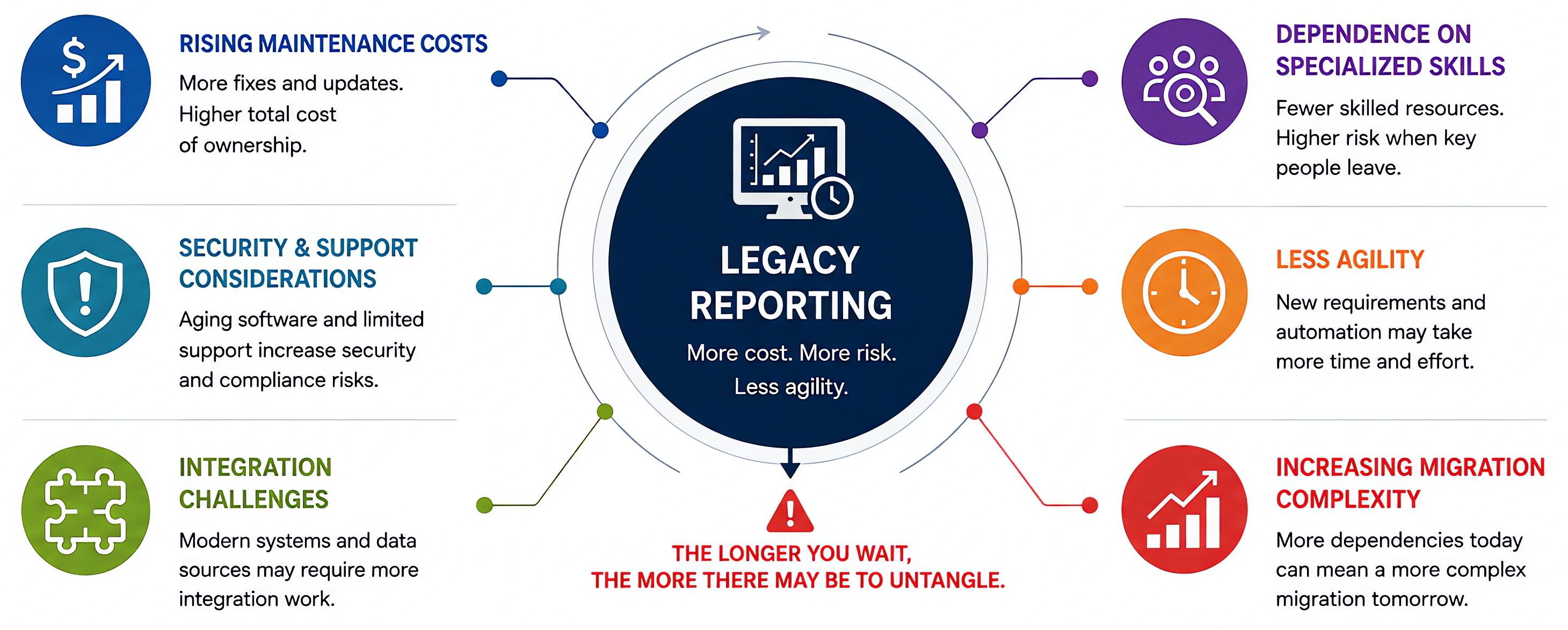
But over time, maintaining these reporting environments becomes increasingly difficult.
Common reasons organizations evaluate replacement options include:
  • Growing enterprise reporting requirements
  • Modernization initiatives across business applications
  • Increasing demand for automation
  • Broader data connectivity requirements
  • Long-term platform strategy
Every organization's reporting landscape is different. The most appropriate modernization strategy depends on business objectives, reporting complexity and existing investments.

The Hidden Costs of Legacy Reporting

Delaying modernization may seem practical, but maintaining an established reporting environment can increase costs, operational effort and complexity over time. As systems evolve, legacy reporting may also become harder to support, integrate and adapt to new business requirements.

Why Consider Elixir Repertoire?

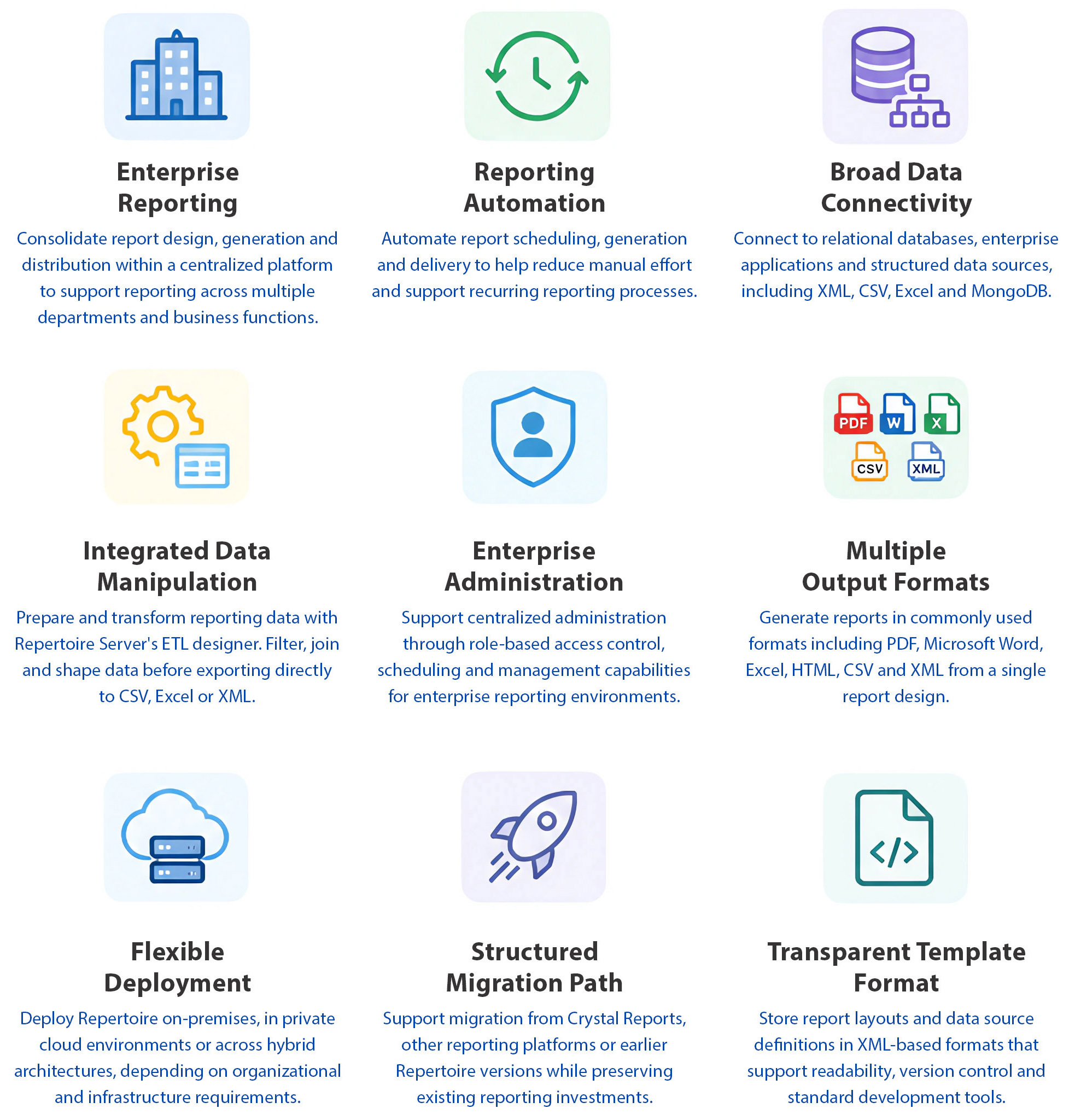
Organizations evaluating a replacement for Crystal Reports® often look beyond report generation alone. They may also want to streamline reporting operations, simplify administration and support evolving business requirements. Elixir Repertoire is designed to help address these needs through a modern enterprise reporting platform.

Supporting Organizations Across Industries

Elixir Technology has over 30 years of experience delivering enterprise software solutions for organizations across the public and private sectors. Our experience spans enterprise reporting, document generation and digital transformation initiatives across multiple industries.
You can learn more about the organizations and industries we have worked with by visiting our customer reference page HERE.
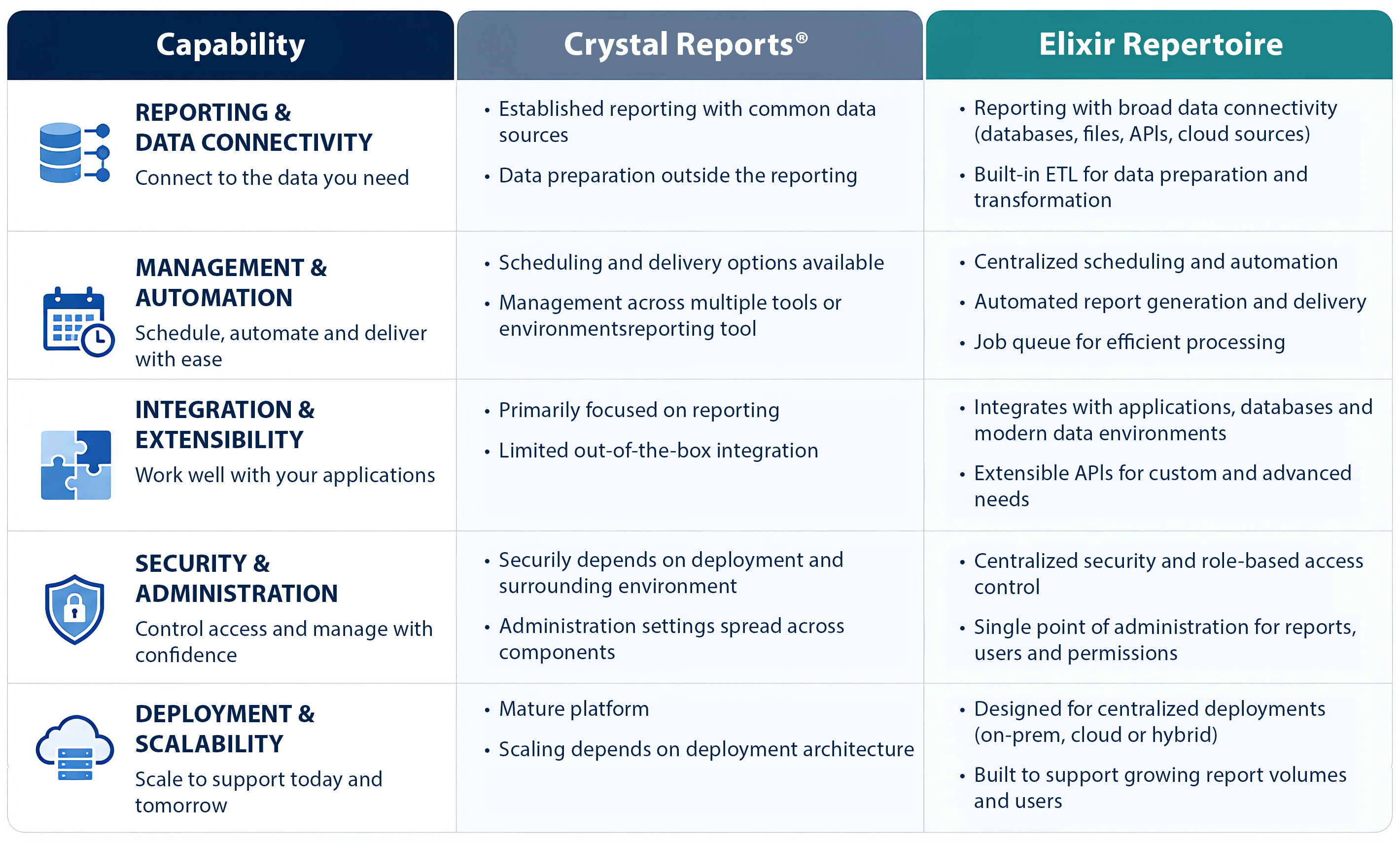
Crystal Reports® and Repertoire at a Glance

Disclaimer: This comparison is based on capabilities of an earlier version of Crystal Reports® and is provided for general reference. Capabilities may vary across Crystal Reports® versions.
Source: https://help.sap.com/docs/SAP_CRYSTAL_REPORTS
Crystal Reports® remains a mature and widely used reporting solution. Repertoire is designed for organizations seeking to extend reporting capabilities, modernize reporting operations or adopt a broader enterprise reporting platform.

How Migration Typically Works

Migrating from Crystal Reports® involves more than converting reports. It requires understanding reporting dependencies, business processes and operational requirements.
Every reporting environment is different. The migration approach is typically planned according to report complexity, business priorities and implementation requirements.

Frequently Asked Questions

Is Elixir Repertoire a replacement for Crystal Reports®?
Repertoire can be used as part of a Crystal Reports® replacement or modernization strategy. The appropriate approach depends on your reporting environment, business requirements and migration objectives.
Can existing Crystal Reports® be migrated?
Migration approaches vary depending on report complexity and implementation requirements. An assessment helps determine the most appropriate migration strategy for your organization.
Will migration disrupt our reporting operations?
Migration is typically planned in phases to help maintain business continuity while reports are transitioned and validated.
Can Repertoire integrate with our existing systems?
Yes. Repertoire supports integration with enterprise databases, applications and modern data sources as part of a broader enterprise reporting environment.
Is Repertoire suitable for enterprise-scale reporting?
Repertoire is designed for organizations that manage reporting across departments and require centralized scheduling, automation and enterprise reporting capabilities.
How long does a Crystal Reports® migration typically take?
The timeline depends on factors such as the number of reports, report complexity, integrations and validation requirements. A migration assessment helps establish an appropriate implementation plan.