
A full-stack low-code platform for building applications, integrating systems, and orchestrating workflows across enterprise environments.
Elixir Ambience is a powerful Full-Stack Low-Code Platform that accelerates the development of digital and smart applications. Designed for adaptability, it helps organizations respond quickly to changing needs while keeping applications modular, scalable, and future-ready. With built-in security and portability, businesses can deploy across diverse environments with confidence. By simplifying complex development and reducing coding effort, Elixir Ambience enables teams to deliver maintainable solutions faster, driving innovation, efficiency, and long-term growth.

- Video Management System
- Facial Recognition
- Vehicle Detection
- Intrusion and Threats
- Technical and Deployment Overview
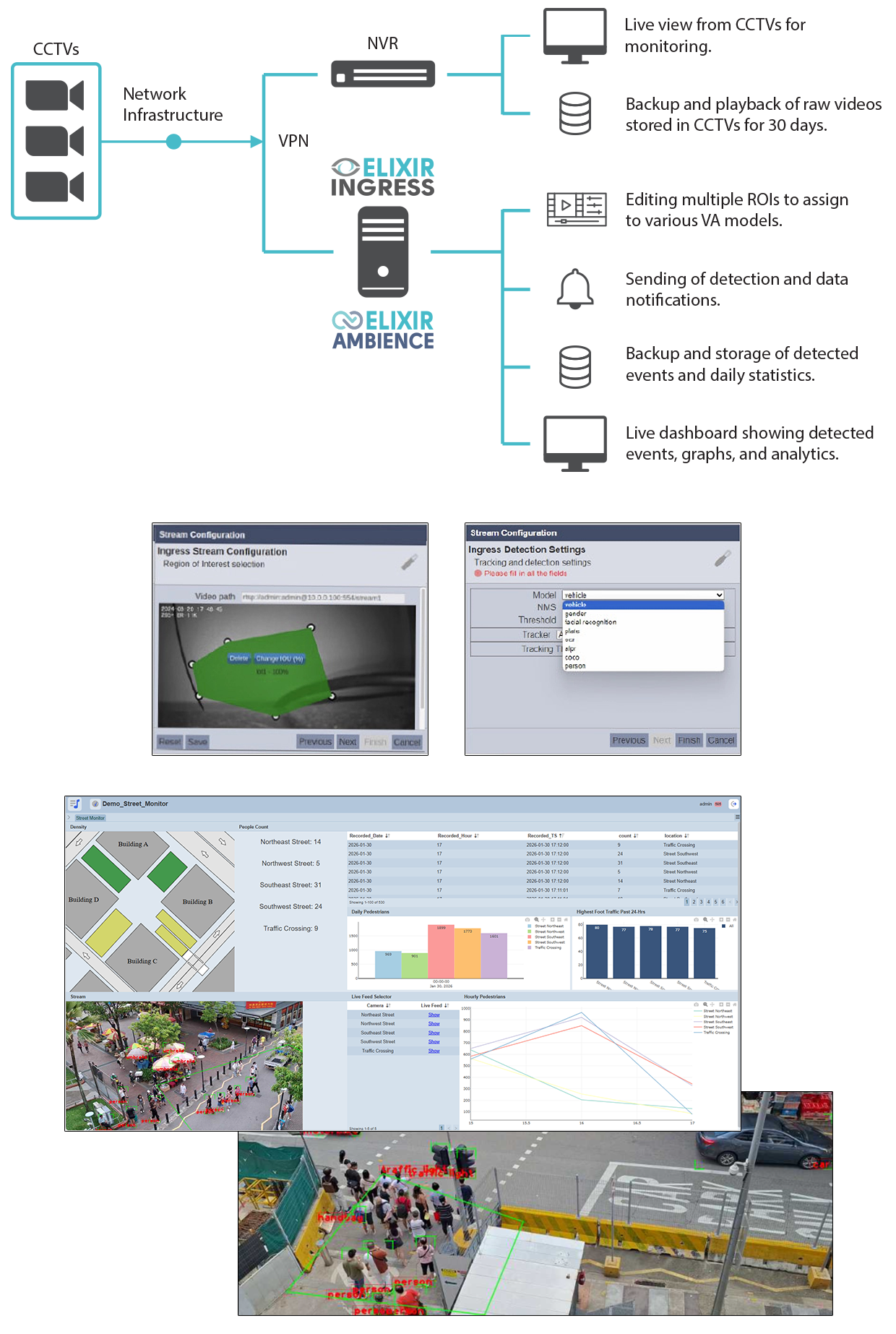
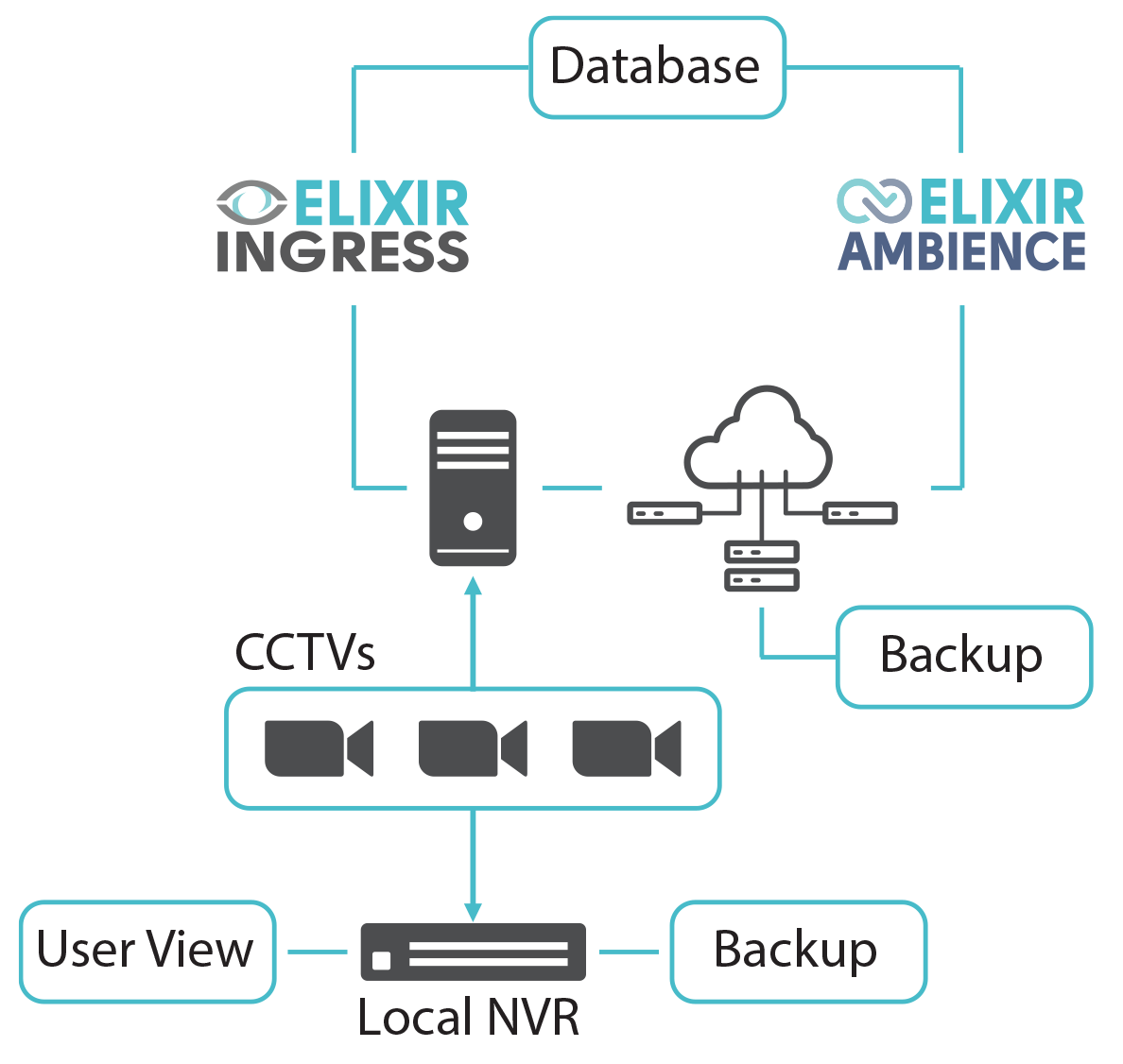
Elixir Ingress is a Video Analytics (VA) solution that complements existing surveillance environments by working cleanly with standard CCTV setups. When deploying Ingress together with Elixir Ambience and a Network Video Recorder (NVR), the overall solution can cover a broad set of operational and security requirements. A VPN can be used to provide an encrypted connection from CCTV sources into the system.
On the Elixir Ingress side, the focus is on stream onboarding, analytics configuration, and operational control including defining camera sources, configuring analytics per stream, and previewing results through a management interface.
Key video management capabilities:
• Camera and stream setup: onboard CCTV feeds and manage analytics assignment per camera/stream.
• Region-of-interest (ROI) configuration: define monitored zones to focus detection on what matters.
• Event pipeline: publish detections as messages (MQTT) for alerting and integrations.
• Media and data handling: flexible storage options (cloud object storage or local file system) plus system data persistence based on deployment needs.
Ingress plugs into your existing CCTV environment
Keep your NVR for recording, and add Ingress as the open analytics layer that converts streams into alerts and automated actions.
On the Elixir Ingress side, the focus is on stream onboarding, analytics configuration, and operational control including defining camera sources, configuring analytics per stream, and previewing results through a management interface.
Key video management capabilities:
• Camera and stream setup: onboard CCTV feeds and manage analytics assignment per camera/stream.
• Region-of-interest (ROI) configuration: define monitored zones to focus detection on what matters.
• Event pipeline: publish detections as messages (MQTT) for alerting and integrations.
• Media and data handling: flexible storage options (cloud object storage or local file system) plus system data persistence based on deployment needs.
Ingress plugs into your existing CCTV environment
Keep your NVR for recording, and add Ingress as the open analytics layer that converts streams into alerts and automated actions.
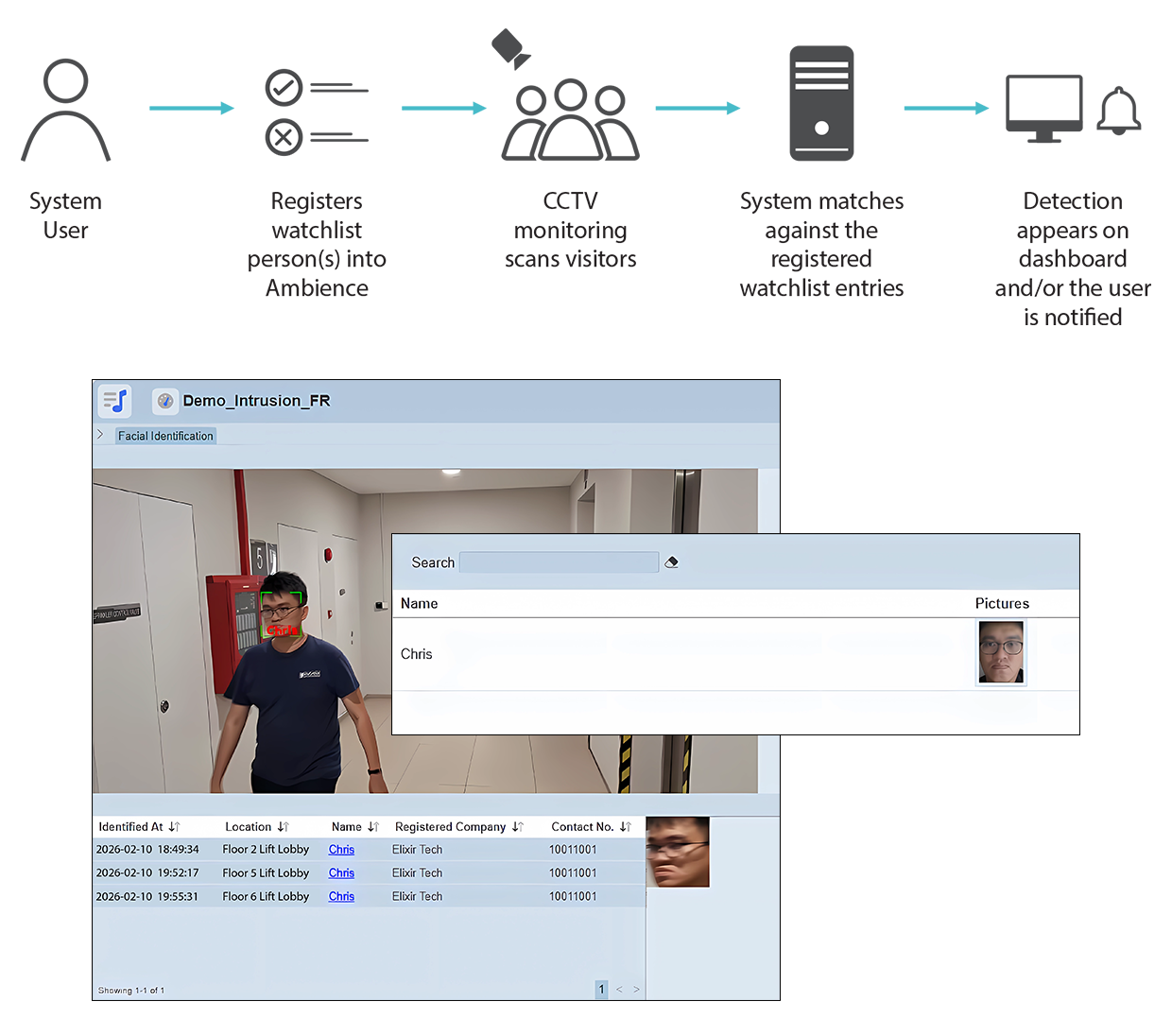
Elixir Ingress can scan CCTV video streams using facial recognition, enabling real-time detection workflows for security operations.
A common operational use is watchlist screening: detecting persons of interest and triggering alerts based on configured rules and confidence thresholds. For privacy-sensitive environments, Ingress can enable an optional face blurring mode to support privacy-by-design where identification is not required.
Key facial recognition capabilities:
• Face scanning on live streams: continuous detection on CCTV feeds.
• Watchlist alerting: detect and notify when a match is found.
• Privacy controls: optional blurring of detected faces.
Responsible deployment
Deploy facial recognition with clear purpose limitation, access control, and retention policies aligned to your organisation’s privacy and compliance requirements.
A common operational use is watchlist screening: detecting persons of interest and triggering alerts based on configured rules and confidence thresholds. For privacy-sensitive environments, Ingress can enable an optional face blurring mode to support privacy-by-design where identification is not required.
Key facial recognition capabilities:
• Face scanning on live streams: continuous detection on CCTV feeds.
• Watchlist alerting: detect and notify when a match is found.
• Privacy controls: optional blurring of detected faces.
Responsible deployment
Deploy facial recognition with clear purpose limitation, access control, and retention policies aligned to your organisation’s privacy and compliance requirements.
Loading/Unloading Bay (LUB) Monitoring
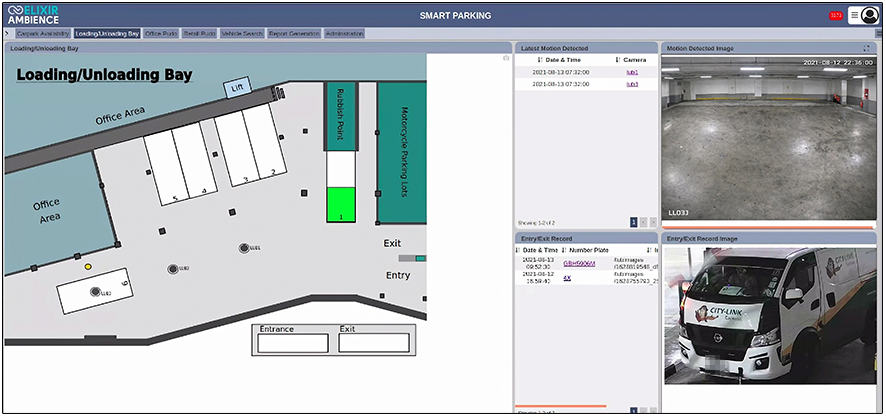
Elixir Ingress enables always-on visibility of loading/unloading bays to keep logistics moving and bays available when they’re needed. Using video analytics, the system detects bay obstruction and vehicle overstay, then triggers real-time alerts to operations or security teams for fast intervention. It also generates congestion reporting, so you can identify peak pressure windows, recurring offenders, and underutilized bays, supporting better scheduling, enforcement, and throughput optimization across the facility.
Elixir Ingress enables always-on visibility of loading/unloading bays to keep logistics moving and bays available when they’re needed. Using video analytics, the system detects bay obstruction and vehicle overstay, then triggers real-time alerts to operations or security teams for fast intervention. It also generates congestion reporting, so you can identify peak pressure windows, recurring offenders, and underutilized bays, supporting better scheduling, enforcement, and throughput optimization across the facility.
Pick Up/Drop Off (PUDO) Monitoring
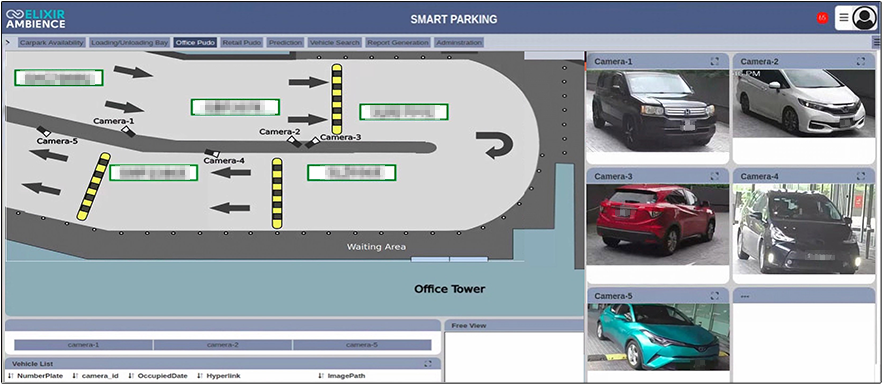
For high-traffic PUDO zones, Elixir Ingress monitors dwell time and parking behavior to prevent bottlenecks and unsafe stopping patterns. The platform automatically flags vehicles that overstay or park where they shouldn’t, enabling timely prompts (or escalation) before queues build up. Over time, the same monitoring data can be used to fine-tune PUDO policies, such as time limits, zone design, and operational staffing, so passenger flow stays smooth and compliant.
For high-traffic PUDO zones, Elixir Ingress monitors dwell time and parking behavior to prevent bottlenecks and unsafe stopping patterns. The platform automatically flags vehicles that overstay or park where they shouldn’t, enabling timely prompts (or escalation) before queues build up. Over time, the same monitoring data can be used to fine-tune PUDO policies, such as time limits, zone design, and operational staffing, so passenger flow stays smooth and compliant.
TAG with License Plate Recognition
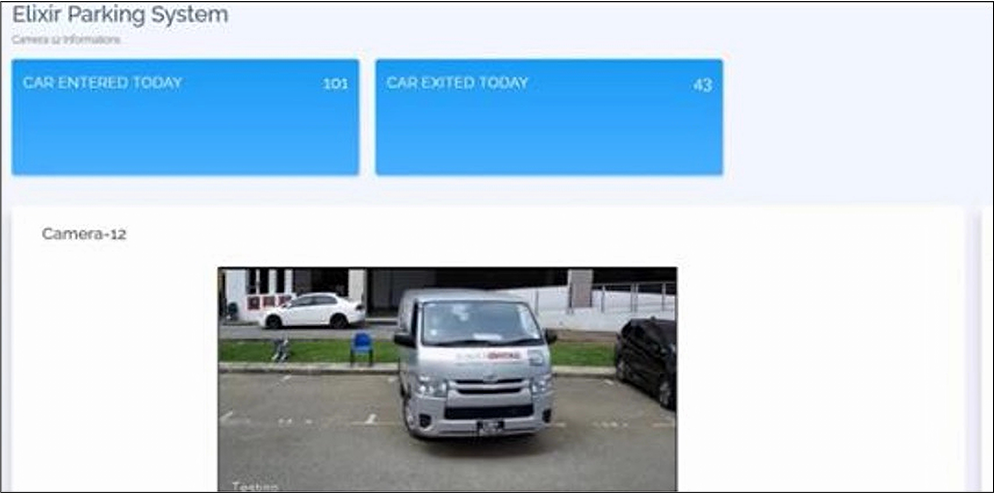
Elixir Ingress “tags” vehicles using License Plate Recognition (LPR), capturing and identifying license plate numbers via image recognition to create a reliable vehicle identity layer. With this tag, the system can support downstream use cases such as search-and-retrieve, access control workflows, and traceability across zones. Combined with Ingress tracking/monitoring capabilities, it becomes easier to correlate a vehicle’s presence, movements, and events (e.g., entry/exit records) for operational control, compliance, and analytics.
Elixir Ingress “tags” vehicles using License Plate Recognition (LPR), capturing and identifying license plate numbers via image recognition to create a reliable vehicle identity layer. With this tag, the system can support downstream use cases such as search-and-retrieve, access control workflows, and traceability across zones. Combined with Ingress tracking/monitoring capabilities, it becomes easier to correlate a vehicle’s presence, movements, and events (e.g., entry/exit records) for operational control, compliance, and analytics.

Privileged Parking Lots Number Plate Recognition and Alert for Anomaly Detection
Elixir Ingress strengthens enforcement for restricted and privileged parking areas, such as VIP lots, EV charging bays, and handicap lots, by recognizing number plates and issuing alerts when anomalies occur. The solution is designed to work across indoor/outdoor environments and supports night visibility use cases, helping teams maintain policy compliance even in low-light conditions. Alerts can be tuned to focus attention on suspicious or non-compliant patterns, improving security posture while protecting priority access for authorized users.
Elixir Ingress strengthens enforcement for restricted and privileged parking areas, such as VIP lots, EV charging bays, and handicap lots, by recognizing number plates and issuing alerts when anomalies occur. The solution is designed to work across indoor/outdoor environments and supports night visibility use cases, helping teams maintain policy compliance even in low-light conditions. Alerts can be tuned to focus attention on suspicious or non-compliant patterns, improving security posture while protecting priority access for authorized users.
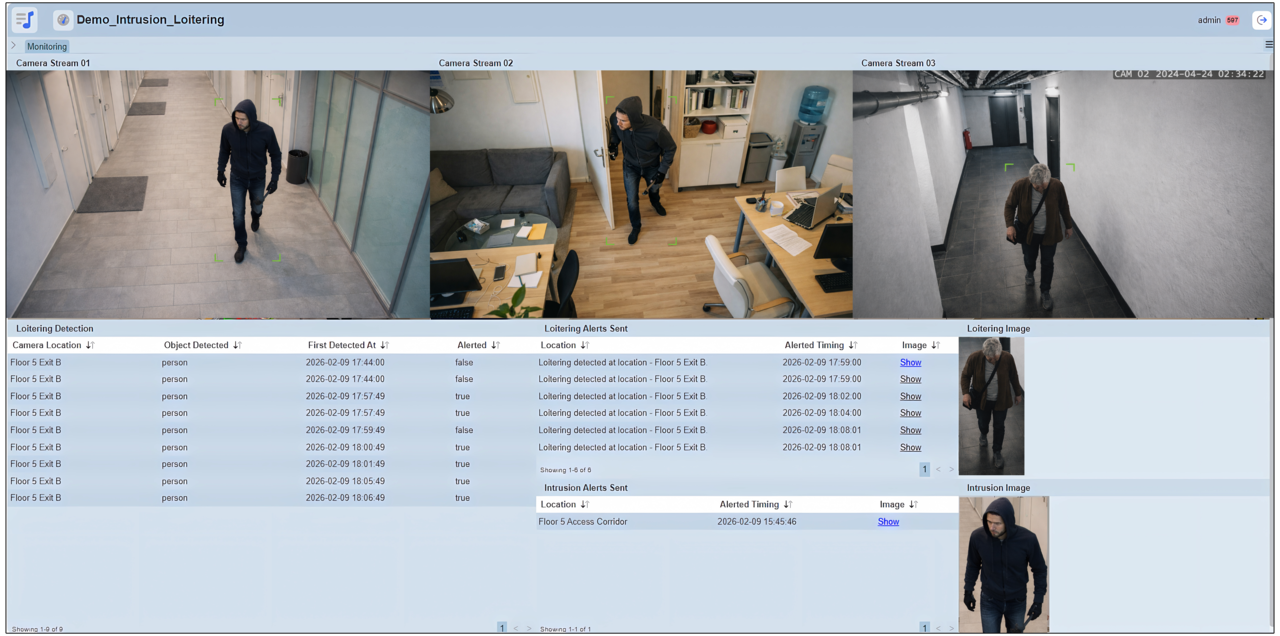
Elixir Ingress supports practical threat detection by letting operators define regions of interest (ROI) across CCTV views. When a person enters or remains within a monitored zone, Ingress can detect presence and treat it as an event for follow-up actions.
To reduce noise and improve relevance, monitored zones can be governed by time schedules so activity can be treated differently depending on time-of-day (for example, after-hours presence triggers escalation). For incident handling and audit, the workflow can include raising alerts and saving snapshots for evidence and review.
Detection scenarios:
• Intrusion detection: detect presence in restricted or sensitive zones based on ROI.
• Scheduled threat rules: apply time windows to distinguish normal vs suspicious activity.
• Loitering detection: evaluate dwell time within a monitored area.
• People counting and anomaly awareness: count persons within an area and flag abnormal patterns relative to the time-of-day.
Integration and downstream actions
Publish threat events through MQTT and open interfaces to downstream systems such as alerting platforms, PSIM, maintenance workflows, and operational dashboards.
To reduce noise and improve relevance, monitored zones can be governed by time schedules so activity can be treated differently depending on time-of-day (for example, after-hours presence triggers escalation). For incident handling and audit, the workflow can include raising alerts and saving snapshots for evidence and review.
Detection scenarios:
• Intrusion detection: detect presence in restricted or sensitive zones based on ROI.
• Scheduled threat rules: apply time windows to distinguish normal vs suspicious activity.
• Loitering detection: evaluate dwell time within a monitored area.
• People counting and anomaly awareness: count persons within an area and flag abnormal patterns relative to the time-of-day.
Integration and downstream actions
Publish threat events through MQTT and open interfaces to downstream systems such as alerting platforms, PSIM, maintenance workflows, and operational dashboards.
Analytics Library and Model Extensibility
Ingress includes Elixir-trained models out-of-the-box so teams can start quickly. For specialised needs, Ingress supports adding external models via a built-in ONNX interface, enabling an open model ecosystem that evolves with your requirements.
Architecture and Open Integration
Ingress is built with a clear separation between ingestion, analytics execution, messaging, and storage. Video sources feed into analytics pipelines; detections are distributed through an MQTT-based message queue; data is stored flexibly; and operations are monitored through system health telemetry and thresholds.
Deployment and Scalability
Ingress is designed to scale across sites and workloads for both on-premises and cloud deployments. It supports GPU acceleration or CPU-only modes so you can balance throughput and cost based on your environment.
Operations Monitoring
• System data collection: CPU, memory, and temperature monitoring.
• Monitoring thresholds and alerts to maintain operational reliability.
Smart Campus and Cross-System Outcomes (Ingress + Ambience).
When used with Elixir Ambience, Ingress events can flow through open interfaces to operational systems and outcomes such as PSIM, CMMS, and digital twin workflows, supporting mobility, security, and facility management scenarios.
System Requirements (Web-ready)
• OS: Windows or Unix 64-bit
• Java 17 (including Open JDK) or higher
• 4 GB RAM or more recommended (installing Ambience is optional and may require additional RAM)
• Browser: HTML5 supported
Ingress includes Elixir-trained models out-of-the-box so teams can start quickly. For specialised needs, Ingress supports adding external models via a built-in ONNX interface, enabling an open model ecosystem that evolves with your requirements.
Architecture and Open Integration
Ingress is built with a clear separation between ingestion, analytics execution, messaging, and storage. Video sources feed into analytics pipelines; detections are distributed through an MQTT-based message queue; data is stored flexibly; and operations are monitored through system health telemetry and thresholds.
Deployment and Scalability
Ingress is designed to scale across sites and workloads for both on-premises and cloud deployments. It supports GPU acceleration or CPU-only modes so you can balance throughput and cost based on your environment.
Operations Monitoring
• System data collection: CPU, memory, and temperature monitoring.
• Monitoring thresholds and alerts to maintain operational reliability.
Smart Campus and Cross-System Outcomes (Ingress + Ambience).
When used with Elixir Ambience, Ingress events can flow through open interfaces to operational systems and outcomes such as PSIM, CMMS, and digital twin workflows, supporting mobility, security, and facility management scenarios.
System Requirements (Web-ready)
• OS: Windows or Unix 64-bit
• Java 17 (including Open JDK) or higher
• 4 GB RAM or more recommended (installing Ambience is optional and may require additional RAM)
• Browser: HTML5 supported
More Products


Elixir Allegro
An enterprise agentic AI platform for orchestrating intelligent agents, automation, and human collaboration at scale.
Elixir Allegro is a modular agentic AI platform that enables organizations to deploy, coordinate, and govern AI agents across business operations. Combining reasoning, memory, execution, and oversight within a unified architecture, it supports intelligent automation while maintaining human-in-the-loop control. Designed for deployment flexibility, Allegro can operate as a standalone platform or integrate seamlessly into existing enterprise environments.
Elixir Allegro is a modular agentic AI platform that enables organizations to deploy, coordinate, and govern AI agents across business operations. Combining reasoning, memory, execution, and oversight within a unified architecture, it supports intelligent automation while maintaining human-in-the-loop control. Designed for deployment flexibility, Allegro can operate as a standalone platform or integrate seamlessly into existing enterprise environments.

Elixir Repertoire
A reporting and document generation platform designed for high-precision, high-volume enterprise reporting and modernisation.
Elixir Repertoire is an Enterprise Reporting Platform supporting centralized report generation on demand or scheduled. With a built-in data preparation facility, you can generate reports in many formats, including PDF and XLSX, from both structured and semi-structured data, while joining and merging disparate data sources. It can also produce native Microsoft Word editable output with Microsoft Word as the template designer, or a PDF e-Book which combines multiple output types with a Table of Content for quick navigation. For large scale End User Reporting, its Report Portal enables self-serviced report generation, with configurable Queue Management to prioritize and optimize underlying resources.
Elixir Repertoire is an Enterprise Reporting Platform supporting centralized report generation on demand or scheduled. With a built-in data preparation facility, you can generate reports in many formats, including PDF and XLSX, from both structured and semi-structured data, while joining and merging disparate data sources. It can also produce native Microsoft Word editable output with Microsoft Word as the template designer, or a PDF e-Book which combines multiple output types with a Table of Content for quick navigation. For large scale End User Reporting, its Report Portal enables self-serviced report generation, with configurable Queue Management to prioritize and optimize underlying resources.
About Elixir Technology
Engineering The Intelligent Enterprise
Enterprise systems are the backbone of operations; they must run reliably and support continuous change.
Elixir Technology
engineers the intelligent enterprise by modernising and integrating the systems that run your organisation, grounded in practical software engineering and shaped by early R&D at Singapore’s R&D centre.
Our platforms address needs across application development, integration, information delivery, and AI workflows: Elixir Ambience (full-stack low-code for apps, integration, analytics), Elixir Allegro (collaborative, multi-model AI agent deployment), Elixir Repertoire (reporting and document generation), and Elixir Ingress (video analytics for situational intelligence).
We also deliver services to design and deploy solutions across cloud, on-premises, and hybrid environments, enabling partners to embed, extend, or combine our platforms.
Our platforms address needs across application development, integration, information delivery, and AI workflows: Elixir Ambience (full-stack low-code for apps, integration, analytics), Elixir Allegro (collaborative, multi-model AI agent deployment), Elixir Repertoire (reporting and document generation), and Elixir Ingress (video analytics for situational intelligence).
We also deliver services to design and deploy solutions across cloud, on-premises, and hybrid environments, enabling partners to embed, extend, or combine our platforms.
Services and Resources

Support Services

Training Services
Professional Services

Documentation

Software Download
Product Lifecycle


